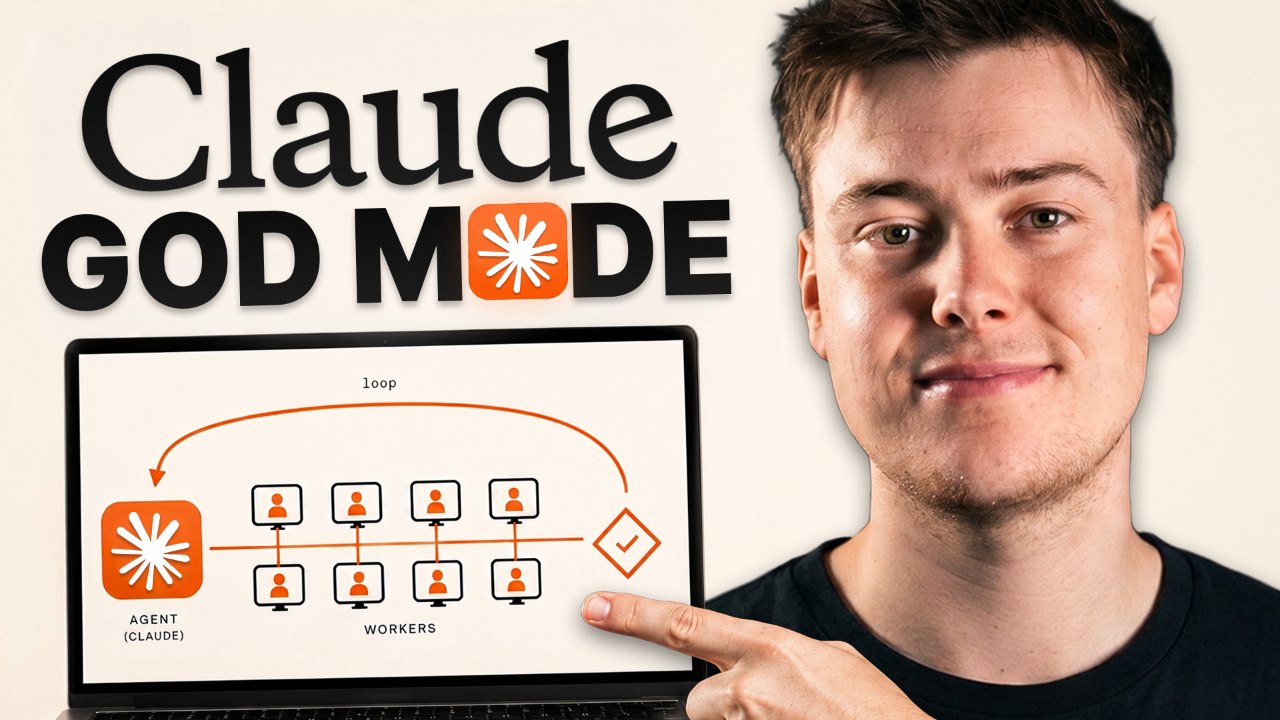

Seven AI Tools Worth Adding to Your Stack
A ranked shortlist with pricing, best use cases, three workflows, and complete prompts for every tool.
7 AI Tool Cheat Sheet
AI Edge
The 7 AI Tool Subscriptions
Ranked 7 to 1. Top 3 workflows + full prompts per tool.
#7 Gemini
Google's multimodal powerhouse. Best image generation in AI. Price: Google AI Pro $19.99/mo | Ultra $124.99/mo | Free tier Best for: Image generation, YouTube research, visual design
Workflow 1: Thumbnail & Graphic Design Pipeline
Use Nano Banana Pro to iterate thumbnail designs before committing to final production. Generate 5 to 10 variations, review with your team, refine the top picks, then only move into final drafting. This cuts the design cycle from hours to minutes and saves money on designer revisions.
Prompt (paste into Gemini):
"Generate 5 YouTube thumbnail variations for a video titled
'The 7 AI Tools Worth Paying For in 2026'.
Requirements:
- Bold text overlay: keep it to 5 words max
- High contrast background (dark with bright accent)
- Include a human face placeholder (shocked/curious expression)
- Each variation should test a different layout:
1. Text left, face right
2. Face center, text above
3. Split screen with tool logos
4. Minimalist with just text and gradient
5. Before/after style comparison
Style: clean, modern, YouTube-optimized for mobile.
Output at 1280x720."
Workflow 2: YouTube Research Engine
Gemini is trained on all of Google and YouTube data. Use it to surface trends, analyze competitor videos, and identify content gaps in your niche. This is where Gemini outperforms every other LLM for YouTube creators.
Prompt:
"Analyze the top 20 performing YouTube videos in the
AI tools / productivity niche from the last 30 days.
AI Edge
For each video, extract:
- Title and channel name
- View count and publish date
- Thumbnail style (describe it)
- Hook used in the first 15 seconds
- Core content framework (listicle, tutorial, review, etc.)
Then identify:
1. The 3 most common title patterns
2. Topics with high views but low competition
3. Gaps: topics the audience wants that nobody has covered well
4. Recommended video ideas I could create this week
My niche: AI tools for business owners and creators.
My audience: 25-45, non-technical, revenue-focused."
Workflow 3: Batch Image Generation for Content
Generate social media graphics, carousel images, and ad creatives at scale. Nano Banana produces studio-quality output. Use the API for bulk workflows or the Gemini app for one-off creations.
Prompt:
"Create a set of 4 Instagram carousel images for a post
about '7 AI Tools That Replaced My Entire Team'.
Slide 1: Hook image - bold white text on dark gradient
Text: '7 AI Tools. $140/month. Zero employees.'
Slide 2: Clean infographic showing the 7 tool icons arranged
in a grid with names below each
Slide 3: Before/after comparison
Left: 'Old way - 5 tools, 3 freelancers, $3K/month'
Right: 'New way - 7 AI subs, $140/month'
Slide 4: CTA slide
Text: 'Full breakdown in bio. Free cheat sheet.'
Style: black background, white text, minimal.
Accent color: electric blue (#0066FF).
Output each slide at 1080x1080."
#6 Grok
The only AI with real-time X (Twitter) data access.
AI Edge
Price: X Premium $8/mo | Premium+ $40/mo | SuperGrok $30/mo Best for: Live news, market monitoring, real-time research
Workflow 1: Real-Time Market Brief
Grok taps into live X data. No other LLM has this. Build a daily market scan that captures breaking news, sentiment shifts, and price catalysts as they happen. More current than Perplexity or Gemini for fast-moving events like earnings, geopolitics, or crypto volatility.
Prompt:
"Give me a real-time market brief as of right now.
Cover:
1. MACRO: Breaking news in the last 6 hours affecting US
equities, crypto, or global markets. Include source tweets.
2. CRYPTO: BTC and ETH price action + sentiment. Top 3
narratives on crypto Twitter right now. Whale movements
or exchange flows.
3. AI SECTOR: Major announcements from Anthropic, OpenAI,
Google, Meta, or xAI in the last 24 hours. Link tweets.
4. SENTIMENT: Overall market mood on X - bullish, bearish,
or uncertain? Back it up with posts from 50K+ accounts.
5. ACTION ITEMS: Based on all of the above, the 3 things
I should watch today.
Format: bullet points, concise, with tweet links."
Workflow 2: Stock & Crypto Deep Research
Use DeepSearch mode to find nuances that other LLMs miss. Grok picks up on narratives forming in real time across X before they reach mainstream media. Ideal for finding alpha.
Prompt (use DeepSearch mode):
"Deep research on $NVDA (NVIDIA) right now.
I want:
1. Latest earnings data and forward guidance
2. What Wall Street analysts are saying THIS WEEK
(find specific analyst tweets and reports)
3. Retail trader sentiment on X - bullish or bearish?
Top 5 most-engaged tweets about NVDA from 48 hours
AI Edge
4. Insider trading filings in the last 30 days
5. Supply chain signals - TSMC orders, chip demand,
datacenter buildout tweets that affect NVDA
6. Key risk factors the market might be underpricing
Give me a buy/hold/sell framework based on the data.
Not financial advice - just organize the information."
Workflow 3: Tweet Context Analysis
Click the Grok icon on any tweet to get instant context, background, and follow-up analysis. Essential for power users of X who need depth behind the headlines without opening 15 tabs.
How to use (no prompt needed):
1. Find any tweet on X about a topic you care about
2. Click the Grok icon (star/sparkle) below the tweet
3. Grok automatically provides:
- Full context behind the tweet
- Related tweets and threads on the same topic
- Background on the person who posted it
- Counter-arguments or opposing views
- Links to primary sources
Pro tip: After Grok gives context, follow up with:
"Now compare this to what the top 5 accounts in [your niche]
are saying about the same topic. Who agrees? Who disagrees?
What is the consensus?"
#5 NotebookLM
Google's secret weapon for learning and transcription. Price: Free (core) | Pro via Google AI Pro $19.99/mo Best for: Study, transcription, content reverse-engineering
Workflow 1: Reverse-Engineer Viral Content
Feed a viral video URL into NotebookLM. It transcribes and summarizes automatically. Use the output to extract hooks, structure, pacing, and frameworks. Then pair with Claude to build your own script based on those insights.
Step 1: Add the source
- Open NotebookLM (notebooklm.google)
- Create a new notebook: "Viral Content Analysis"
- Click "Add Source" > paste YouTube URL of a viral video
- NotebookLM transcribes it automatically
AI Edge
Step 2: Analyze (type into the notebook chat)
"Break down this video into its structural components:
1. The hook (first 30 seconds) - what exactly did they say?
2. The promise - what did they tell the viewer they'd get?
3. Content framework - listicle, tutorial, review, story?
4. Retention tricks - pattern interrupts, open loops, cliffhangers
5. CTA - how and when did they ask for engagement?
6. Pacing - how long is each section?
Give me a template I can use to create my own version."
Step 3: Export to Claude
- Copy the analysis
- Paste into a Claude Project with your voice guide
- Ask Claude to write the full script in your voice
Workflow 2: Flashcard & Audio Overview Generation
Upload 3-hour lectures, research papers, or podcast transcripts. NotebookLM creates summaries, flashcards, and Audio Overviews you can listen to while commuting. The best tool for students and lifelong learners.
Step 1: Upload sources
- Add up to 50 sources per notebook (PDFs, docs, URLs)
- Example: upload 5 research papers on a new topic
Step 2: Generate study materials
"Create 20 flashcards covering key concepts from all sources.
Each flashcard:
- Front: A clear question
- Back: A concise answer (2-3 sentences max)
- Source: Which document this came from
Focus on concepts I'd need to explain to someone else."
Step 3: Create an Audio Overview
- Click "Audio Overview" in the Studio panel
- NotebookLM generates a podcast-style discussion
- Download and listen on the go
- Free: 3/day | Pro: 20+/day
AI Edge
Workflow 3: Multi-Source Research Synthesis
Drop multiple PDFs and articles into one notebook. Ask questions that cut across all sources. NotebookLM cites specific documents in every answer. Eliminates manual cross-referencing.
Setup: Add 5-10 sources on a single topic
Prompt:
"Based on everything in this notebook:
1. What are the 3 most important findings that appear
across multiple sources? Cite which sources agree.
2. Where do the sources contradict each other?
List specific disagreements.
3. What questions are NOT answered by any of these sources?
4. If I had to brief someone in 2 minutes on this entire
topic, what would I say? Write that brief for me.
5. What are the strongest arguments on each side of the
central debate in these sources?"
#4 Perplexity
Multi-model orchestration. Workflows that run themselves. Price: Pro $20/mo | Max (Computer) $200/mo | Free tier Best for: Automated workflows, multi-model research, daily briefs
Workflow 1: Automated Morning Market Brief
This one changed how I start every day. Set up a recurring workflow on Perplexity Computer: it scans markets, news, and sentiment every morning, then auto-delivers to your email, Slack, and Discord. It trains itself to get better over time. One prompt creates a permanent employee.
Prompt (Perplexity Computer):
"Create an automated daily workflow that runs at 6:30am UTC.
The workflow should:
1. Scan the top 50 financial news sources for market-moving
events from the past 12 hours
2. Check crypto: BTC, ETH, SOL price action + on-chain events
3. Scan X for the top 10 most-engaged posts about AI, crypto,
AI Edge
and macro markets
4. Summarize into a 500-word brief with:
- 3 key headlines
- Market snapshot (indices + crypto)
- Sentiment assessment (1 sentence)
- 3 things to watch today
- Risk alerts (anything unusual)
Deliver to:
- Email: [your email]
- Slack: #morning-brief
- Discord: #market-updates
After each delivery, evaluate what I open and read.
Over time, prioritize content I engage with and deprioritize
what I skip."
Workflow 2: Multi-Model Research Reports
Perplexity Computer routes tasks across 19+ AI models. Gemini handles research. Claude writes the output. GPT double-checks. One prompt produces a report that would take you hours to compile manually.
Prompt (Perplexity Computer):
"Create a research report on AI infrastructure investments.
Phase 1 - Data Collection (use research models):
- Quarterly earnings from NVDA, AMD, MSFT, GOOG
- Total capex committed to AI infrastructure in 2025-2026
- Revenue growth rates for cloud AI services
- VC funding data for AI startups this quarter
Phase 2 - Analysis (use reasoning models):
- Compare growth rates across the top 5 AI infra companies
- Identify who is gaining or losing share
- Flag risks: overbuilding, demand gaps, margin pressure
Phase 3 - Output (use writing models):
- Format as a 2000-word executive brief
- Include a summary table comparing all companies
- Add 'Key Takeaways' with 5 bullet points
- End with 'What to Watch' for next quarter
Save as PDF and send to my email."
AI Edge
Workflow 3: Autonomous Deal Scanner
Build a scanner for properties, investments, or competitor activity. Set your parameters once. Perplexity Computer runs the workflow autonomously and sends alerts only when your criteria are met.
Prompt (Perplexity Computer):
"Build a continuous monitoring workflow for real estate
opportunities in Dubai Marina and JBR.
Parameters:
- Type: 1-2 bedroom apartments
- Price: AED 800K - 1.5M
- Yield: minimum 7% gross rental
- Ready to move in (no off-plan)
Workflow:
1. Scan Property Finder, Bayut, Dubizzle daily
2. Filter listings matching my criteria
3. Calculate estimated rental yield from market data
4. Score each property 1-10 (location, price/sqft, view, floor)
5. Weekly digest: top 5 finds
6. Immediate alert if anything scores 8+
Include listing link, photos, and analysis for each.
Track price changes on listings I have seen before."
#3 MindOS
AI agents in your pocket. Zero-setup agentic workflows. Price: Free tier | Paid plans available | Cheaper than Perplexity Best for: Multi-step web workflows, agent automation, competitive analysis
Workflow 1: Automated Competitive Analysis
Build an agent that researches your competitors daily. It analyzes what content is outperforming, what topics are trending, and generates a summary report. Zero developer experience needed. The entry point for anyone who wants AI agents without the technical setup.
MindOS Agent Setup:
Agent Name: "Competitor Intel Agent"
Agent Role: YouTube competitive analyst
Instructions:
AI Edge
"You are my competitive analysis agent for YouTube.
Every day at 8am:
1. Visit these 5 competitor channels: [list URLs]
2. Find their most recent 3 videos each
3. Record: title, views, publish date, like count
4. Identify which video outperformed relative to
their average (views vs. subscriber count)
5. Why did it outperform? Topic, hook, thumbnail?
Weekly summary (every Monday):
- Which competitor grew the most this week?
- Top 3 performing videos across all competitors
- Topics with high engagement that I have NOT covered
- 3 video ideas based on gaps I can fill
Deliver via email. Keep it under 400 words."
Workflow 2: Property & Deal Research Agent
Set parameters for properties or business opportunities. MindOS agents scan the market across multiple websites, find matches, and can even automate initial outreach. Runs autonomously.
MindOS Agent Setup:
Agent Name: "Deal Finder"
Agent Role: Property and investment scout
Instructions:
"You are my deal research agent.
Scan daily: Rightmove, Zoopla, OnTheMarket (UK)
Property Finder, Bayut (Dubai)
Criteria:
- Budget: $200K-500K
- Type: apartments, 1-2 bed
- Yield: minimum 6% gross
- Location: [your target areas]
For each match:
1. Extract price, size, location, photos
2. Estimate rental yield from comparable listings
3. Check if the price dropped recently
4. Score 1-10
AI Edge
Send me only listings scoring 7+.
Include the link and a 2-sentence summary of why
it is worth looking at."
Workflow 3: Cross-Site Workflow Automation
String together actions across multiple websites without developer skills. MindOS handles the browsing, data extraction, and decision-making. 80 to 90% of what Perplexity Computer does at a fraction of the cost.
MindOS Agent Setup:
Agent Name: "Content Repurposer"
Agent Role: Cross-platform content distribution
Instructions:
"You are my content repurposing agent.
When I publish a new YouTube video:
1. Go to my channel, find the latest video
2. Extract the title, description, and transcript
3. Create a Twitter/X thread (7-10 tweets) with a hook
4. Create a LinkedIn post (300 words, professional)
5. Create an Instagram carousel outline (8 slides)
6. Save all drafts to a Google Doc titled:
'[Video Title] - Repurposed Content'
Rules:
- Each platform should feel native, not copy-pasted
- Twitter: punchy, conversational, numbered
- LinkedIn: thought-leadership, first-person
- Instagram: visual-first, one idea per slide
- Always end with a CTA to the video"
#2 ChatGPT
The biggest LLM. Best thinking partner. Codex is elite. Price: Plus $20/mo | Pro $100/mo (5x Codex) | Pro $200/mo (20x) Best for: Business strategy, brainstorming, voice prompting, Codex coding
Workflow 1: Business Strategy Sparring Partner
GPT is the best brainstorming and strategy model. Feed it your business context, revenue data, and goals. Use it as a thinking partner for decisions. Not an executor. A thought partner. That is where GPT earns its subscription.
AI Edge
Prompt:
"You are my business strategy advisor. Context:
- Revenue: $1.8M/year, growing 15% MoM
- Business: AI media company, 30 employees
- Channels: YouTube (500K subs), X (1.2M followers),
newsletter (200K subscribers)
- Revenue: sponsorships (60%), courses (25%), consulting (15%)
- Goal: $5M/year within 12 months
Questions:
1. Highest-leverage growth move in the next 90 days?
2. Which revenue stream scales without adding headcount?
3. Where am I most vulnerable? What could break?
4. If you were my COO, what would you do in week one?
5. 90-day sprint plan with 3 measurable milestones.
Be direct. Challenge my assumptions. Don't sugarcoat."
Workflow 2: Voice-First Mobile Workflow
Voice prompting on ChatGPT is more refined than any competitor. Use it on mobile for brainstorms, meeting prep, and idea capture while walking, driving, or between meetings.
Voice prompt examples (say out loud to ChatGPT):
Meeting prep:
"I have a meeting in 20 minutes with a potential sponsor.
They run a SaaS company in AI. They want to sponsor my
YouTube channel. What 3 questions should I ask? What
should my minimum deal be for 500K subscribers? Red flags?"
Idea capture:
"I just had an idea for a video. The concept: showing the
exact dollar amount I spend on AI tools per month and the
ROI of each one. Hook: 'I spend $347/month on AI. Here is
what I get back.' Does this work? How would you structure
it for maximum retention?"
Quick brainstorm:
"10 YouTube video titles about AI tools that would get
clicks. Curiosity-driven. Include numbers.
Avoid clickbait that doesn't deliver."
AI Edge
Workflow 3: Codex Autonomous Coding Agent
Codex is one of the best coding agents available. Use the cloud version for autonomous sessions (1 to 30 min) or run CLI locally. GPT-5.4 powers the reasoning.
Codex cloud prompt:
"In my repo (link to GitHub), create:
1. New API endpoint /api/analytics returning JSON summary
of user engagement metrics
2. Pull from existing PostgreSQL database
3. Include: DAU, avg session length, top 5 pages, conversion
4. Add error handling and rate limiting
5. Write tests for the new endpoint
6. Create a PR with clear description
Use existing code style. Do not modify existing endpoints."
Codex CLI (local):
$ codex "Refactor the auth module to use JWT tokens instead
of session cookies. Update all routes and middleware.
Run test suite after changes and fix any failures."
#1 Claude
If I could only use one AI tool, this would be it. I retain 80 to 90% of my efficiency with just this one subscription. Every other tool does at least one thing better. But Claude does everything well enough that it could replace the rest.
Price: Pro $20/mo | Max $100/mo (5x) | Max $200/mo (20x) Best for: Everything. Writing, coding, projects, automation, artifacts, skills.
Workflow 1: Claude Code - Build Full Systems
Claude Code is the best agentic coding tool available. Build personal operating systems, dashboards, multi-agent architectures, and full applications from your terminal. The Anthropic CEO confirmed their own engineers are now reviewing code that Claude writes. That tells you everything.
# Start Claude Code
cd ~/my-project && claude
Prompt:
"Build me a personal finance dashboard.
AI Edge
Requirements:
- Read transactions from a CSV I will provide
- Categorize each transaction (food, transport, subs, etc.)
- Store in local SQLite database
- Web dashboard on localhost:3000 showing:
- Monthly spending by category (bar chart)
- Spending trend over 6 months (line chart)
- Top 10 merchants by total spend
- Recurring subscriptions detected automatically
- Alerts if any category exceeds average by 20%
Tech: Python backend, HTML/JS frontend, Chart.js.
Black and white design. No frameworks."
Workflow 2: Projects + Skills - Your Custom AI Employee
Create a Claude Project with INSTRUCTIONS.md (the employee handbook), MEMORY.md (the long-term brain), and context files. Claude remembers everything. Add Skills to train it on specific tasks: your writing voice, thumbnail review criteria, video ideation. The skill library lets you download pre-built skills for any role.
Project folder:
/YouTube-Content/
INSTRUCTIONS.md
MEMORY.md
CONTEXT-brand-voice.md
CONTEXT-past-scripts.md
/outputs/
INSTRUCTIONS.md:
# INSTRUCTIONS
## Who You Are
You are my YouTube content strategist and scriptwriter.
## What You Do
- Generate video ideas based on trending topics
- Write full video scripts in my voice
- Review and score thumbnail concepts
- Create titles and descriptions optimized for CTR
## Rules
- Match my tone: direct, practical, no fluff
- Never invent statistics - flag anything needing a source
AI Edge
- Every script: hook, promise, body, CTA
- If unclear, ask ONE question before starting
- Log new preferences to MEMORY.md
## What Good Output Looks Like
- Scripts: 2000-3000 words, conversational, with timestamps
- Titles: 8-12 words, curiosity-driven, include a number
- Thumbnails: score 1-10 with specific feedback
## Memory
Start: read MEMORY.md
End: update MEMORY.md with new learnings
Workflow 3: Artifacts + Cowork + Dispatch - Control Everything
Artifacts create interactive dashboards and visuals in seconds. Cowork controls your desktop. Dispatch auto-routes workflows. Combined, you can build apps, create spreadsheets, and manage everything from your phone via the Telegram integration. Previously this required OpenClaw and a dedicated Mac. Now it is built into Claude.
Artifact prompt:
"Create an interactive HTML dashboard showing my content
performance across platforms.
Include:
- YouTube: views, subs gained, top 5 videos this month
- X/Twitter: impressions, engagement rate, follower growth
- Newsletter: open rate, click rate, subscriber count
Bloomberg terminal aesthetic. Dark background. Green accent.
Monospace for numbers. Date selector for time range.
Sparkline charts for trends."
Cowork prompt (from phone via Telegram):
"Open my Google Sheets revenue tracker. Add a new row:
$4,200 sponsorship from [Company], invoice sent,
payment due 30 days. Update the monthly total formula."
Dispatch auto-routing:
- "Research this company" -> triggers web research
- "Write a draft about this" -> triggers writing project
- "Build a tool for this" -> triggers Claude Code
AI Edge
Why Claude Is #1
- Best writer among all LLMs. Most human-sounding, most creative.
- Claude Code is reliably consistent and fast. The best coding agent.
- Skills let you train Claude on YOUR specific voice and workflows.
- Shipping speed is unmatched. New features every week.
- 1M token context window. Remembers more than any competitor.
- If you buy one subscription, buy this one.